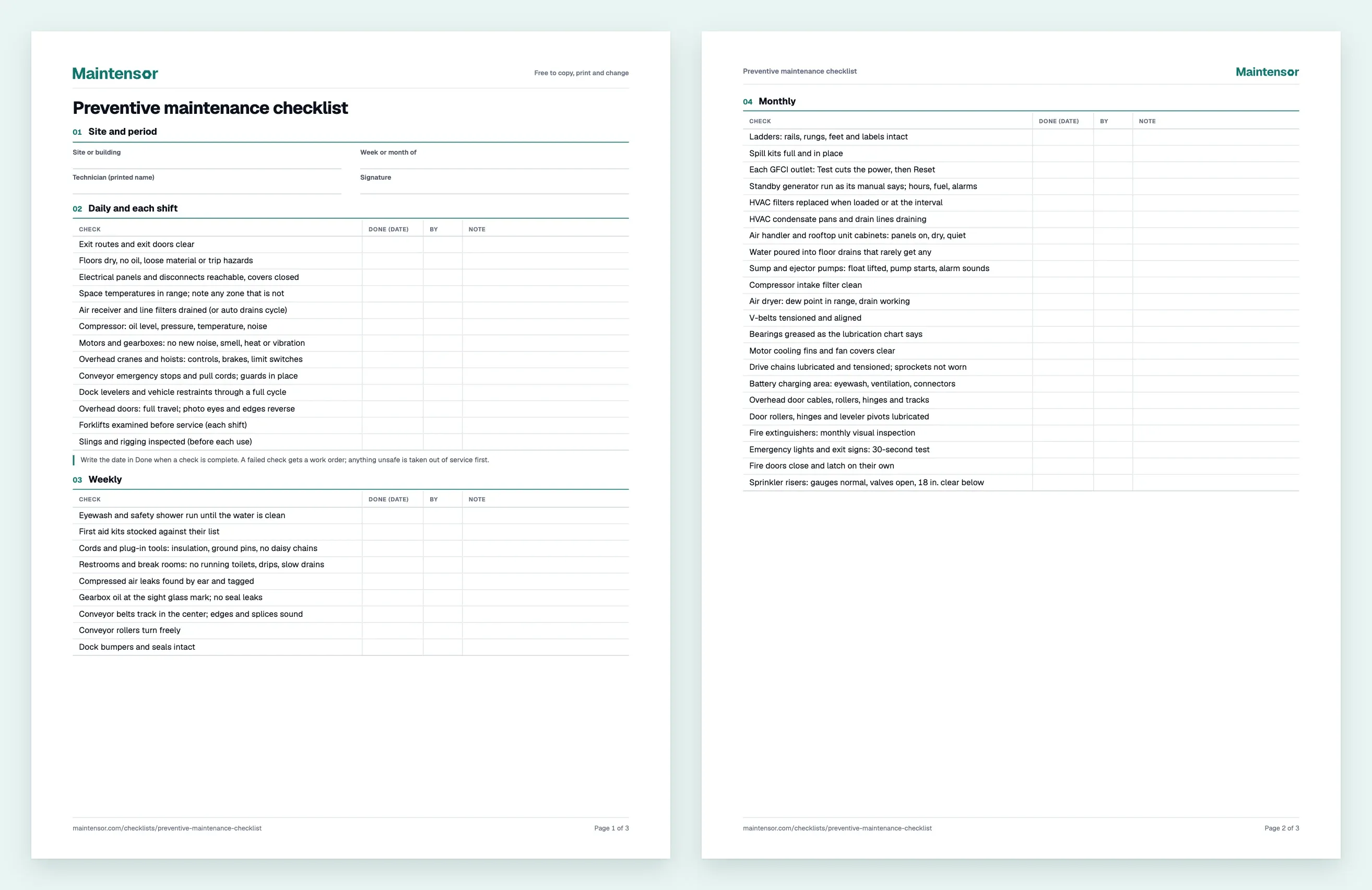
The checks, by how often
The sheet groups the checks by how often, because a technician works a daily, weekly or monthly round rather than one system at a time. Write the date in Done when a check is complete. This list says what to do on each visit; the preventive maintenance schedule says when each visit comes due.
Daily and each shift13 checks
- Exit routes and exit doors clear
- Floors dry, no oil, loose material or trip hazards
- Electrical panels and disconnects reachable, covers closed
- Space temperatures in range; note any zone that is not
- Air receiver and line filters drained (or auto drains cycle)
- Compressor: oil level, pressure, temperature, noise
- Motors and gearboxes: no new noise, smell, heat or vibration
- Overhead cranes and hoists: controls, brakes, limit switches
- Conveyor emergency stops and pull cords; guards in place
- Dock levelers and vehicle restraints through a full cycle
- Overhead doors: full travel; photo eyes and edges reverse
- Forklifts examined before service (each shift)
- Slings and rigging inspected (before each use)
Weekly9 checks
- Eyewash and safety shower run until the water is clean
- First aid kits stocked against their list
- Cords and plug-in tools: insulation, ground pins, no daisy chains
- Restrooms and break rooms: no running toilets, drips, slow drains
- Compressed air leaks found by ear and tagged
- Gearbox oil at the sight glass mark; no seal leaks
- Conveyor belts track in the center; edges and splices sound
- Conveyor rollers turn freely
- Dock bumpers and seals intact
Monthly22 checks
- Ladders: rails, rungs, feet and labels intact
- Spill kits full and in place
- Each GFCI outlet: Test cuts the power, then Reset
- Standby generator run as its manual says; hours, fuel, alarms
- HVAC filters replaced when loaded or at the interval
- HVAC condensate pans and drain lines draining
- Air handler and rooftop unit cabinets: panels on, dry, quiet
- Water poured into floor drains that rarely get any
- Sump and ejector pumps: float lifted, pump starts, alarm sounds
- Compressor intake filter clean
- Air dryer: dew point in range, drain working
- V-belts tensioned and aligned
- Bearings greased as the lubrication chart says
- Motor cooling fins and fan covers clear
- Drive chains lubricated and tensioned; sprockets not worn
- Battery charging area: eyewash, ventilation, connectors
- Overhead door cables, rollers, hinges and tracks
- Door rollers, hinges and leveler pivots lubricated
- Fire extinguishers: monthly visual inspection
- Emergency lights and exit signs: 30-second test
- Fire doors close and latch on their own
- Sprinkler risers: gauges normal, valves open, 18 in. clear below
Quarterly13 checks
- Roof drains and scuppers clear; flashing tight
- Panel directories legible and correct
- Condenser and evaporator coils clean; fins combed
- Outdoor air dampers open and close fully
- Refrigerant pressures recorded (certified technician)
- Water heaters: no leaks or rust; temperature as set
- Exposed piping and valves; isolation valves exercised
- Air receiver safety valve tested as the maker directs
- Couplings aligned, inserts intact, guards fastened
- Variable frequency drives: fans, filters, fault log
- Motor current recorded and compared with the last reading
- Pallet racking: uprights, beams, locks, anchors, load signs
- Leveler hydraulics: no leaks, fluid at the mark, strut holds
By run hours2 checks
- Compressor oil, filter and separator; record the hour meter
- Forklift planned service; record the hour meter
Yearly17 checks
- Each lockout/tagout procedure inspected
- Infrared scan of panels and switchgear (qualified person)
- Generator starting and UPS batteries: terminals and age
- Heating: burners, heat exchangers, flues; CO alarms tested
- Water heater flushed; relief valve tested
- Backflow preventers tested (certified tester)
- Before freezing: hose bibs and irrigation drained; heat trace
- Air receiver tank: rust, dents, leaks
- Gearbox oil changed or sampled
- Insulation resistance test on critical motors
- Vehicle lifts inspected by a qualified lift inspector
- Elevator inspection certificate current
- Fire extinguishers: annual maintenance recorded
- Battery emergency lights: 90-minute test
- Fire door assemblies inspected, with a signed record
- Sprinkler main drain flow test
- Fire alarm system tested (qualified contractor)
The checks by system, and the rules behind themNine tables, one per system, each check with how often and the rule where one sets it.
Every check is generic good practice, and the intervals are typical starting points. Where a rule sets an interval, the item cites it and links the source. “Daily” means once a day, or once a shift where equipment runs around the clock.
General facility and safety
| How often | Check |
|---|---|
| Daily | Walk the exit routes: aisles and exit doors clear, nothing stored in them. OSHA 29 CFR 1910.37(a)(3) requires exit routes to be free and unobstructed. |
| Daily | Floors in work areas dry, with no oil, loose material or trip hazards. |
| Weekly | Run each plumbed eyewash and safety shower until clean water flows; nothing blocks the way to it. OSHA refers employers to ANSI Z358.1 as guidance for this equipment. |
| Weekly | First aid kits stocked against their contents list. |
| Monthly | Ladders: rails, rungs, feet and labels intact. Tag out any damaged ladder. |
| Monthly | Spill kits full, and placed where the spills would happen. |
| Quarterly | Roof drains and scuppers clear, no standing water, no loose flashing. |
| Yearly | Inspect each lockout/tagout procedure in use. OSHA 29 CFR 1910.147(c)(6) requires this at least once a year. |
Electrical
| How often | Check |
|---|---|
| Daily | Panels and disconnects reachable: nothing stored in front of them, covers closed. |
| Weekly | Cords and plug-in tools: no cut insulation, no missing ground pins, no power strips plugged into each other. |
| Monthly | Each GFCI outlet: press Test, confirm the power cuts, press Reset. |
| Monthly | Standby generator: run it for the time and load in its manual; record hours, fuel level and any alarm. |
| Quarterly | Panel directories legible and matching what each breaker feeds. |
| Yearly | Infrared scan of panels, switchgear and motor control centers under load, by a qualified person. Fix hot connections with the circuit locked out. |
| Yearly | Generator starting batteries and UPS batteries: terminals clean and tight, age within the maker’s service life. |
HVAC and air handling
| How often | Check |
|---|---|
| Daily | Space temperatures in range at the thermostats or building controls; note any zone that is not. |
| Monthly | Filters: replace when the pressure gauge or a look says they are loaded, or at the manual’s interval. |
| Monthly | Condensate pans and drain lines draining, with no standing water or slime. |
| Monthly | Air handler and rooftop unit cabinets: panels on, no water inside, no new noise. |
| Quarterly | Condenser and evaporator coils clean; comb out bent fins. |
| Quarterly | Outdoor air dampers open and close fully when commanded; linkages tight. |
| Quarterly | Refrigerant circuit pressures and temperatures recorded and compared with last quarter, by a technician certified to handle refrigerant. |
| Yearly | Before the heating season: burners, heat exchangers and flues inspected; carbon monoxide alarms tested in rooms with fuel-burning equipment. |
Plumbing and water
| How often | Check |
|---|---|
| Weekly | Restrooms and break rooms: no running toilets, dripping taps or slow drains. |
| Monthly | Pour water into floor drains that rarely get any, so the trap keeps sewer gas out. |
| Monthly | Sump and sewage ejector pumps: lift the float, confirm the pump starts and the high-water alarm sounds. The pump maintenance checklist covers the rest of a pump. |
| Quarterly | Water heaters: no leaks or rust at fittings; temperature set to the figure in your procedure. |
| Quarterly | Exposed piping and valves: no leaks, corrosion or torn insulation. Turn isolation valves through their travel so they do not seize. |
| Yearly | Flush water heater sediment and test the temperature and pressure relief valve as the manual directs. |
| Yearly | Backflow preventers tested by a certified tester, where your water utility requires it. |
| Yearly | Before freezing weather: drain and shut off outdoor hose bibs and irrigation; confirm heat trace works. |
Compressed air
| How often | Check |
|---|---|
| Daily | Drain water from the receiver tank and line filters, or confirm the automatic drains cycle. |
| Daily | Compressor: oil level in range, discharge pressure and temperature normal, no new noise. |
| Weekly | Walk the system during a quiet shift and listen for leaks at fittings, hoses and couplers. Tag each one. |
| Monthly | Intake filter clean; replace it at the manual’s interval. |
| Monthly | Dryer: dew point indicator in range, condensate drain working. |
| Quarterly | Receiver safety valve tested as the manufacturer directs. |
| By run hours | Oil, oil filter and separator changed at the hours in the manual. Record the hour meter at every service. |
| Yearly | Receiver tank checked outside for rust, dents and leaks. Check your jurisdiction’s rules for pressure vessel inspection. |
Motors, drives, belts and bearings
| How often | Check |
|---|---|
| Daily | Motors and gearboxes: no new noise, smell, heat or vibration compared with yesterday. |
| Weekly | Gearbox oil at the sight glass mark; no leaks at seals. |
| Monthly | V-belts tensioned and aligned to the manual. Replace cracked, glazed or frayed belts as a matched set. |
| Monthly | Grease bearings with the grease type and amount on the lubrication chart. Wipe the fitting first, and do not over-grease. How much grease, and how often. |
| Monthly | Motor cooling fins and fan covers clear of dust. |
| Quarterly | Couplings aligned and inserts intact; guards back on and fastened. |
| Quarterly | Variable frequency drives: cabinet fans running, filters clean, fault log read. |
| Quarterly | Motor current recorded under normal load and compared with the nameplate and the last reading. The electric motor maintenance checklist works the readings out. |
| Yearly | Gearbox oil changed or sampled at the manual’s interval. |
| Yearly | Insulation resistance test on critical motors by a qualified electrician; compare with last year’s figure. |
Conveyors and material handling
| How often | Check |
|---|---|
| Each shift | Forklifts: examine each truck before it goes into service, and park any truck with a defect until it is repaired. OSHA 29 CFR 1910.178(q)(7) requires this at least daily, and after each shift where trucks run around the clock. |
| Before each use | Slings and rigging inspected for damage. OSHA 29 CFR 1910.184(d) requires this each day before use, by a competent person. |
| Daily | Overhead cranes and hoists: controls, brakes and limit switches work. OSHA 29 CFR 1910.179(j) sets daily to monthly and 1 to 12 month inspections for overhead cranes. |
| Daily | Conveyor emergency stops and pull cords stop the line; guards in place. |
| Weekly | Conveyor belts track in the center; no frayed edges or damaged splices. |
| Weekly | Rollers turn freely; replace seized or flat-spotted ones. |
| Monthly | Drive chains lubricated and tensioned; sprockets not hooked or worn. |
| Monthly | Battery charging area: eyewash working, ventilation running, no corrosion on connectors. |
| Quarterly | Pallet racking: no bent uprights or beams, beam locks in, anchors tight, load signs posted. |
| By run hours | Forklift planned service at the manufacturer’s interval; record the hour meter. |
Doors, docks and lifts
| How often | Check |
|---|---|
| Daily | Dock levelers and vehicle restraints work through a full cycle; the lip extends and stores. |
| Daily | Overhead doors open and close fully; photo eyes and reversing edges stop and reverse the door. |
| Weekly | Dock bumpers and seals intact, none missing. |
| Monthly | Overhead door cables, rollers, hinges and tracks: no fraying, no rust, rollers seated. Leave spring work to a trained door technician. |
| Monthly | Door rollers, hinges and leveler pivot points lubricated with what the manufacturer specifies. |
| Quarterly | Leveler hydraulics: no leaks, fluid at the mark, and the maintenance strut holds the deck up. |
| Yearly | Vehicle lifts in a fleet shop inspected by a qualified lift inspector. The Automotive Lift Institute says its ANSI/ALI ALOIM standard calls for this at least once a year. |
| Yearly | Elevators: inspection certificate current. Your state, province or city sets the interval and who inspects. |
Fire and life safety: a reminder, not a substitute
These items are here so they are not forgotten. They do not replace the fire code, your fire inspector or the qualified contractors who test these systems. Ask your inspector which editions and intervals apply to your building. Here each item’s monthly check is followed by its yearly one.
| How often | Check |
|---|---|
| Monthly | Fire extinguishers: in place, unblocked, pin and seal intact, gauge in the green, tag current. OSHA 29 CFR 1910.157(e)(2) requires a monthly visual inspection; NFPA 10 is the standard for portable extinguishers. |
| Yearly | Fire extinguishers: annual maintenance check with the date recorded, as OSHA 1910.157(e)(3) requires. |
| Monthly | Emergency lights and lit exit signs: 30-second test on battery. |
| Yearly | Battery emergency lights: 90-minute test. Both tests come from NFPA 101, section 7.9.3, as the Kansas State Fire Marshal’s emergency lighting log sets out. |
| Monthly | Fire doors close and latch on their own; nothing wedges them open. |
| Yearly | Fire door assemblies inspected and tested, with a signed record. NFPA 80, section 5.2.1 calls for this at least once a year. |
| Monthly | Sprinkler risers: gauges read normal, control valves open. Storage at least 18 inches below the sprinklers, the minimum in OSHA 29 CFR 1910.159(c)(10). |
| Yearly | Sprinkler main drain flow test, which the same OSHA rule asks for each year. The full program for the system follows NFPA 25. |
| Yearly | Fire alarm system tested by a qualified contractor, to NFPA 72 and your local code. |
How to adapt it to your site
- Cut what you do not have. A hotel with no conveyors or compressed air drops those sections and adds its own: PTAC units, the pool, a guest-room round. A fleet shop keeps lifts, doors and compressed air.
- Add the manufacturer’s tasks. Open the manual for each machine that matters and copy its maintenance table in, with its intervals. Where the manual and this list disagree, the manual wins.
- Split it by asset and by who does it. Operators take the daily checks. Technicians take the monthly and quarterly services, one routine per asset. The yearly contractor tests become jobs whose last step is filing the report.
- Give every step a way to fail. “Check the belt” cannot fail. “Belt deflection at mid-span within the manual’s figure; record it” can. A reading gets a number and a limit.
- Add last year’s failures. Every breakdown a check could have caught becomes a new step.
ExampleOne warehouse, five routines
Say a distribution warehouse, made up for this example, has 10 dock doors, 6 forklifts, one air compressor and two rooftop units. It ends up with five routines.
| Routine | How often |
|---|---|
| A forklift check for each truck | Each shift |
| A dock walk covering all 10 doors | Daily |
| The compressor service | Monthly |
| A service for each rooftop unit | Monthly |
| A contractor visit for the fire systems | Yearly |
Before you start
When a check fails
Turn a failed check into a job the same day. Write what was found, take a photo, set a priority. Otherwise “belt cracked” sits in a drawer until the belt breaks.
How to run it so it gets done
A written list means the new hire does the same checks as the technician with twenty years in the building, and a skipped step shows as an empty box. It works only if it is run like this:
- Give each routine an owner and a due date. A list in a binder gets done when someone remembers. A repeating work order stays on the open list until someone closes it.
- Do it at the equipment, one step at a time. A checklist filled in at the desk at the end of the shift records what someone remembers, not what they saw.
- Record readings, not only ticks. A discharge temperature creeping up for three months says something a column of ticks cannot.
- Review the list once a year, and after any failure it should have caught. Remove the steps nobody can fail, and add the ones you wish you had.
If all of this lives on a whiteboard today, what a CMMS is explains what moves into software, and preventive maintenance covers the program around the list.
Where the intervals come from
Where a rule sets an interval, the check cites it and links the source, in the tables above. That is information, not legal advice. Your jurisdiction (in Canada, your province’s workplace safety and fire code rules), your insurer and the manufacturer’s manual decide what applies to you.
The checklist as a recurring work order in Maintensor
In Maintensor a checklist is a procedure: the app’s maintenance checklist software. Procedures cannot be imported, so the list above is typed in, one procedure per routine, and attached to a work order set to repeat daily, weekly, monthly or yearly (preventive maintenance).
- Each procedure is built from 14 kinds of step: Checkbox, Text, Number, Amount, Multiple choice, Checklist, Yes / No / N/A, Inspection check, Photo, File, Signature, Date, Heading and Instruction.
- When a work order is completed, the next is created on its schedule, with the procedure attached blank at its current published version. The technician runs it one step at a time, on a phone or at a desk.
- An Inspection check is answered Pass, Flag or Fail. On Fail, the app asks for a note and a photo before the next step, and offers a follow-up work order with a priority and, when the job is on an asset, a button to mark it down.

Steps marked required that are left open are listed at sign-off. The job can still be completed with exceptions, and the open steps are written to its history.
What it does not do: jobs come due by the calendar, never by run hours or a meter. A Number step can record the hour meter at each service, but nothing comes due from it.
Only Admins and Full users answer checklists, so an operator doing the daily forklift check needs a Full user seat. The Free plan holds 3 procedures and 5 recurring work orders.