Lubrication that comes due on its own.
Set the filler's lubrication to repeat every week. When it is completed, the next one is created with its checklist, its grease and its assignee.

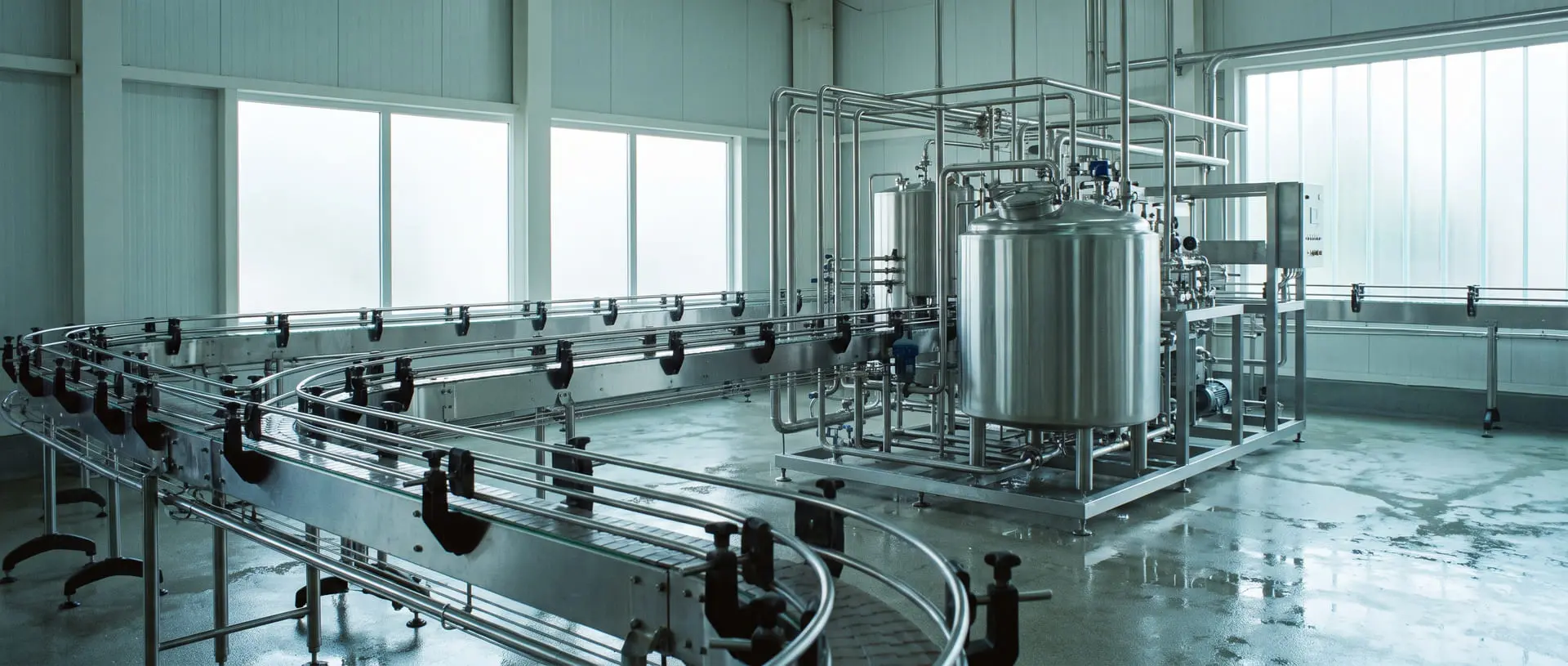
Maintenance software for fillers, pasteurizers, cold rooms and the lines between them. Gasket checks, lubrication and sanitation jobs repeat with their checklists, and each finished job keeps its readings and findings.
What it does there
Set the filler's lubrication to repeat every week. When it is completed, the next one is created with its checklist, its grease and its assignee.
Build the pasteurizer check once: a lockout step, a pressure reading, an inspection of the gaskets. A failed check asks for a finding and a photo, and offers a follow-up work order.

Each filler sits under its line and each cooler under its room. A machine that is down says so in the list.

When an open work order needs more of a part than the storeroom holds, the part says how many short it is, while there is still time to order.

In food and beverage
Maintenance here fits between runs, washdowns and changeovers, on machines that have to stay cleanable.
Questions
See every module on the features page. Lay out the year's services with the free maintenance schedule maker.
A CMMS, or computerized maintenance management system, keeps a plant's work orders, preventive schedules, equipment, spare parts and maintenance history in one place. In a food plant that means the fillers, the thermal process, the cold rooms and the utilities behind them. Maintensor holds the jobs and their records, sanitation jobs included. Your sanitation program and food safety plan stay your own.
It keeps the record: what was done on which machine, who completed it and when, and each reading, finding, photo and signature. What the rules ask stays yours to decide: in the US, for example, 21 CFR 117.35(d) requires food-contact surfaces to be cleaned as often as needed to protect against allergen cross-contact and contamination. Maintensor does not certify compliance with any food safety standard, and it has no export, so the records are read in the app.
Yes, by the calendar, sanitation jobs included. Any job can repeat daily, weekly, monthly or yearly, with a checklist attached, and the next one is created when the current one is completed. Nothing comes due from run counts or hours, so a changeover that follows production is a job you create by hand.
Yes. Give line leads, sanitors and quality staff the Requester role. They describe the problem in a short form and can follow their request until it is fixed. An admin approves it into a work order or declines it with a reason. Requesters cost nothing in any plan, but cannot run checklists: anyone who does, sanitation jobs included, needs a Full user seat.
Yes. A part has a count and a reorder level for each location that holds it. When an open work order needs more of a part than its storeroom holds, the part says so.
Yes, in the browser, so there is nothing to install. On a phone the list and the record are shown one at a time, and a checklist runs full screen, one step at a time. It needs a network connection: there is no offline mode, so check the signal inside the cold rooms first.
Start the trial, add that line's machines and write its weekly gasket check. Two weeks of those will show whether it fits.
30-day free trial. No credit card.