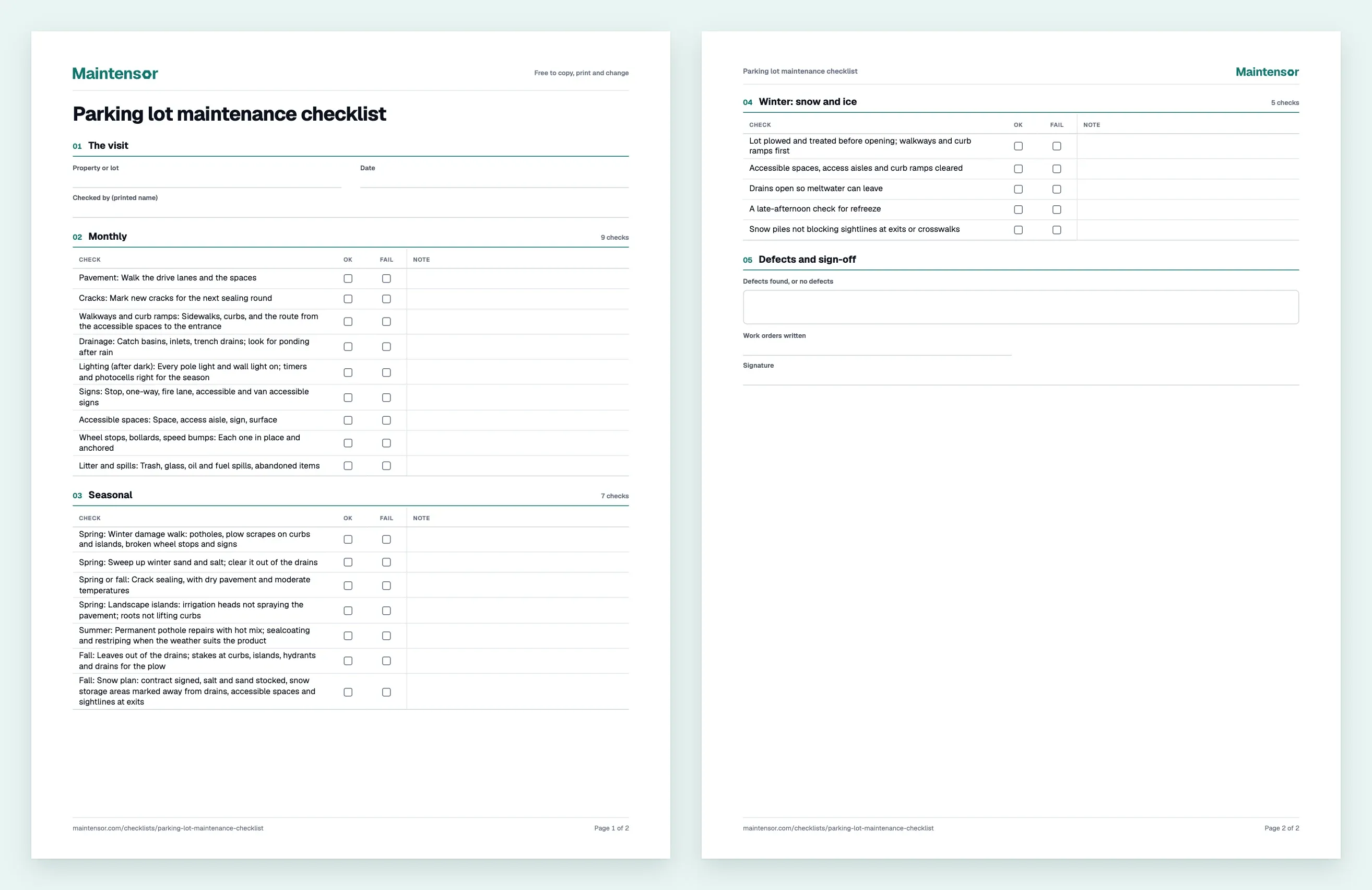
The checks, by season
One sheet per lot and walk. A safety problem is coned off or fixed that day and gets a work order; cosmetic problems wait for the next contractor visit. The yearly survey, sealcoating and restriping are at the end of the tables below.
Monthly9 checks
- Pavement: Walk the drive lanes and the spaces
- Cracks: Mark new cracks for the next sealing round
- Walkways and curb ramps: Sidewalks, curbs, and the route from the accessible spaces to the entrance
- Drainage: Catch basins, inlets, trench drains; look for ponding after rain
- Lighting (after dark): Every pole light and wall light on; timers and photocells right for the season
- Signs: Stop, one-way, fire lane, accessible and van accessible signs
- Accessible spaces: Space, access aisle, sign, surface
- Wheel stops, bollards, speed bumps: Each one in place and anchored
- Litter and spills: Trash, glass, oil and fuel spills, abandoned items
Seasonal7 checks
- Spring: Winter damage walk: potholes, plow scrapes on curbs and islands, broken wheel stops and signs
- Spring: Sweep up winter sand and salt; clear it out of the drains
- Spring or fall: Crack sealing, with dry pavement and moderate temperatures
- Spring: Landscape islands: irrigation heads not spraying the pavement; roots not lifting curbs
- Summer: Permanent pothole repairs with hot mix; sealcoating and restriping when the weather suits the product
- Fall: Leaves out of the drains; stakes at curbs, islands, hydrants and drains for the plow
- Fall: Snow plan: contract signed, salt and sand stocked, snow storage areas marked away from drains, accessible spaces and sightlines at exits
Winter: snow and ice5 checks
- Lot plowed and treated before opening; walkways and curb ramps first
- Accessible spaces, access aisles and curb ramps cleared
- Drains open so meltwater can leave
- A late-afternoon check for refreeze
- Snow piles not blocking sightlines at exits or crosswalks
What counts as a fail, check by checkThe full tables, and the yearly and every-few-years work.
Monthly and seasonal checks are common practice. Sealcoating and restriping intervals depend on traffic, climate and the product, so take them from your paving contractor and the maker. Where a rule applies, such as the 2010 ADA Standards for accessible parking, it is cited as information, not as a compliance review.
Monthly
| Area | Check | Fail if |
|---|---|---|
| Pavement | Walk the drive lanes and the spaces | A pothole; a patch of interlocking cracks (alligator cracking) that has spread; loose stones coming off the surface |
| Cracks | Mark new cracks for the next sealing round | A crack with weeds or water in it, or edges breaking away |
| Walkways and curb ramps | Sidewalks, curbs, and the route from the accessible spaces to the entrance | A change in level over 1/4 inch (6 mm) that is not beveled, or any over 1/2 inch (13 mm), under 2010 ADA Standards 303; see the ADA section below |
| Drainage | Catch basins, inlets, trench drains; look for ponding after rain | A grate blocked, broken or loose; water still standing a day after rain |
| Lighting (after dark) | Every pole light and wall light on; timers and photocells right for the season | Any light out; lights on in daylight; a pole leaning or missing its base cover |
| Signs | Stop, one-way, fire lane, accessible and van accessible signs | Missing, bent, or faded too far to read |
| Accessible spaces | Space, access aisle, sign, surface | Aisle used for carts, snow or storage; sign missing; surface broken |
| Wheel stops, bollards, speed bumps | Each one in place and anchored | Loose, cracked, or rebar showing |
| Litter and spills | Trash, glass, oil and fuel spills, abandoned items | A spill not cleaned up; glass in the lanes |
Seasonal
| Season | Work | Fail if |
|---|---|---|
| Spring | Winter damage walk: potholes, plow scrapes on curbs and islands, broken wheel stops and signs | Damage found and not on a work order |
| Spring | Sweep up winter sand and salt; clear it out of the drains | Sand still in inlets after sweeping |
| Spring or fall | Crack sealing, with dry pavement and moderate temperatures | Cracks left open into a second winter |
| Spring | Landscape islands: irrigation heads not spraying the pavement; roots not lifting curbs | Water running across the lot; a lifted curb |
| Summer | Permanent pothole repairs with hot mix; sealcoating and restriping when the weather suits the product | Cold patches still in from winter |
| Fall | Leaves out of the drains; stakes at curbs, islands, hydrants and drains for the plow | Drains covered at the first snow |
| Fall | Snow plan: contract signed, salt and sand stocked, snow storage areas marked away from drains, accessible spaces and sightlines at exits | No plan by the first forecast |
Winter: snow and ice
| Check | Fail if |
|---|---|
| Lot plowed and treated before opening; walkways and curb ramps first | Ice on a walkway when the doors open |
| Accessible spaces, access aisles and curb ramps cleared | Snow piled in them |
| Drains open so meltwater can leave | Ponding that refreezes overnight |
| A late-afternoon check for refreeze | Wet patches left untreated at dusk |
| Snow piles not blocking sightlines at exits or crosswalks | A driver cannot see the sidewalk |
Yearly and every few years
| Interval | Work | Basis |
|---|---|---|
| Yearly | Full survey with photos and a crack map; get the paving contractor’s quote | Practice |
| Yearly | Lighting survey: lenses, poles, bases, wiring, timers | Practice |
| Yearly | Fire lane markings and signs as your fire marshal requires | Local fire code |
| Every 2 to 4 years | Sealcoat asphalt, after the cracks are sealed | Practice; the sealer maker’s instructions |
| Every 1 to 3 years, and after each sealcoat | Restripe spaces, aisles, arrows, crosswalks and stop bars | Practice; the restriping rule below for accessible spaces |
| When surveys show it | Mill and overlay, or replace, areas where the base has failed | Paving contractor |
Why cracks and drains come first
Water is what ruins a lot. It gets in through open cracks, softens the base, and in cold climates freezes and lifts the surface. That is why crack sealing and drains come first, and why a lot left alone for a few years is a deferred maintenance bill that arrives all at once.
Accessible spaces: how many a lot needs
Under the 2010 ADA Standards, the count goes by the number of spaces in each parking facility, not per site.
| Spaces in the lot | Accessible spaces |
|---|---|
| 1 to 25 | 1 |
| 26 to 50 | 2 |
| 51 to 75 | 3 |
| 76 to 100 | 4 |
| 101 to 150 | 5 |
| 151 to 200 | 6 |
| 201 to 300 | 7 |
One in every six accessible spaces, and always at least one, must be van accessible.
ExampleOne lot of 150, or two lots of 75
A made-up example: one lot of 150 spaces needs 5 accessible spaces, 1 of them van accessible. Split the same 150 spaces into two lots of 75 and each needs 3, so 6 in all.
Before you start
When a check fails
A pothole, a trip edge on a walkway, a dark light, a missing stop sign or a blocked accessible space is a safety problem. Cone it off or fix it that day, then write a work order. Cosmetic problems, such as faded paint and oil stains, go on the list for the next contractor visit.
The facility maintenance guide shows where the lot fits in a building team’s year.
What the rules say
The 2010 ADA Standards for Accessible Design set accessible parking in sections 208 and 502, and the Department of Justice’s brief on restriping parking spaces says when they apply to an existing lot. In Canada, provinces and cities set the rules for accessible parking.
Restriping, snow and ice, and the ADAWhat to check when the lot is restriped, the duty to keep accessible features working, and OSHA on snow and ice.
This is information to plan with. The brief says a business or a state or local government that restripes must provide accessible spaces as the 2010 Standards require, and that businesses open to the public have an ongoing duty to remove barriers where that is readily achievable.
What to check when the lot is restriped, from section 502:
States add their own rules on top, and in Canada provinces and cities set theirs. For an existing lot, a qualified accessibility consultant or your local building department can tell you what applies.
Snow and ice. For employees, OSHA 29 CFR 1910.22(a)(3) requires walking-working surfaces to be kept free of hazards, naming snow and ice. For businesses open to the public, 28 CFR 36.211 requires accessible features to be kept in working order, with room for brief interruptions during repairs. A van access aisle full of plowed snow is not in working order.
The monthly lot walk in Maintensor: checks, a light count, photos
Enter the lot as a location under its building, or as an asset if you want its own status and history. There is no ready-made checklist, so build the monthly walk once as a procedure.
- The walk. Inspection checks (Pass, Flag or Fail) for pavement, drains, signs and accessible spaces, a Number step for the count of lights out, and a Photo step for any new defect. Attach it to a work order set to repeat monthly on a weekday.
- Dates, not times. Work orders carry dates, not times of day, so put “after dark” in the title of the lighting walk. The spring and fall work are work orders that repeat yearly, each due in its month, and the sealcoat is one that repeats every 3 years.
- A failed check. The technician adds a note and a photo and is offered a follow-up work order, such as a High priority pothole patch.

The paving contractor goes in as a vendor with its contacts; on the Max plan, its invoice can go on the work order as a contractor cost with the receipt.
Only Admins and Full users answer checklists, so a grounds contractor who fills in the walk needs a user seat. The other building checks are in the facility maintenance checklist, and the facility maintenance software page shows the setup for a whole building.